
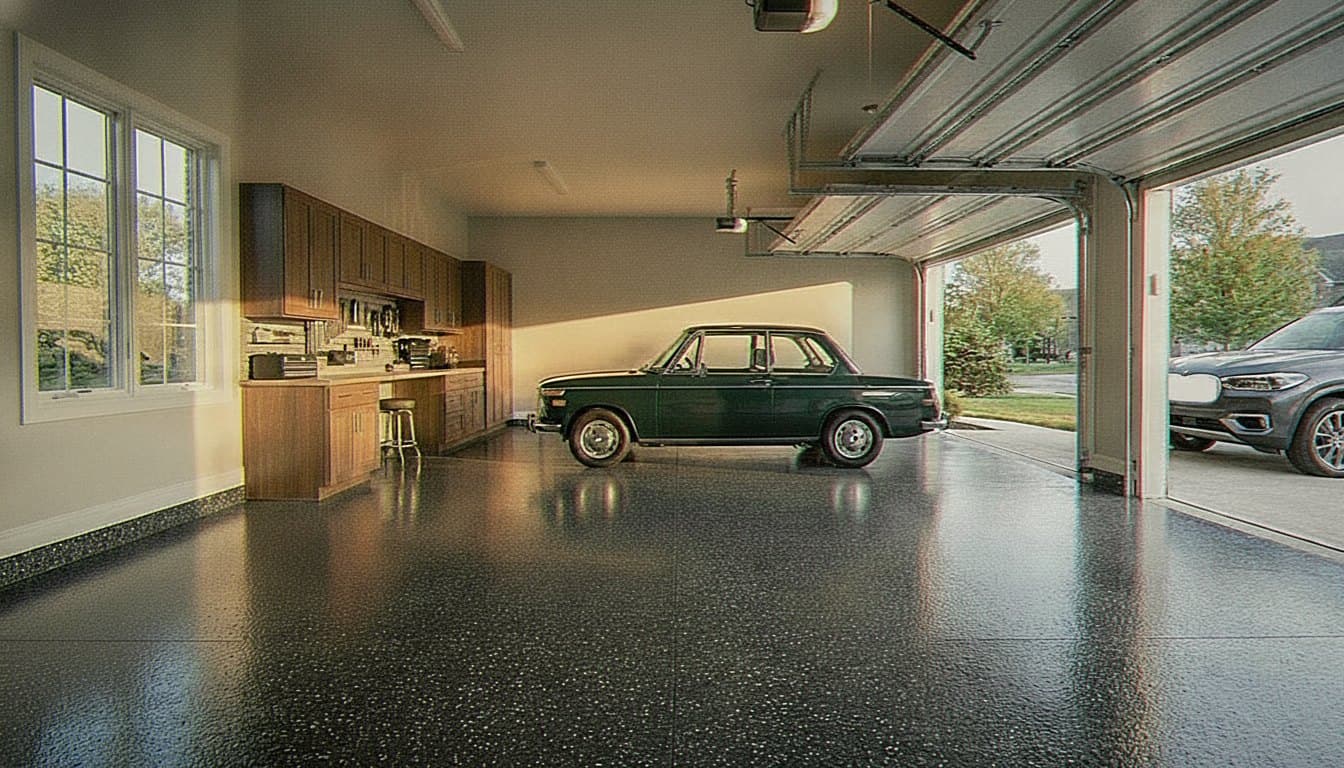
What goes into a garage floor that lasts here
Epoxy flooring is a seamless resin coating that bonds into prepared concrete and seals the slab against salt, oil, and ground moisture. The material arrives as two parts, a resin and a hardener, that react when mixed and cure into a film many times tougher than any paint. A garage off Dodge Park or near Mound Road usually sits on a slab that soaked up salt slush and dropped oil for twenty winters. Stand on it. The surface chalks under your shoe. That chalk is the slab giving up. The boxed kit from the home center buries the chalk under thin resin. It looks fine in May. Then by August it hazes over. The first warm tire of summer peels it off in patches. We do not answer that with another bucket of paint. We build an epoxy garage floor made for the damp and the road salt this part of Macomb County puts down every winter.
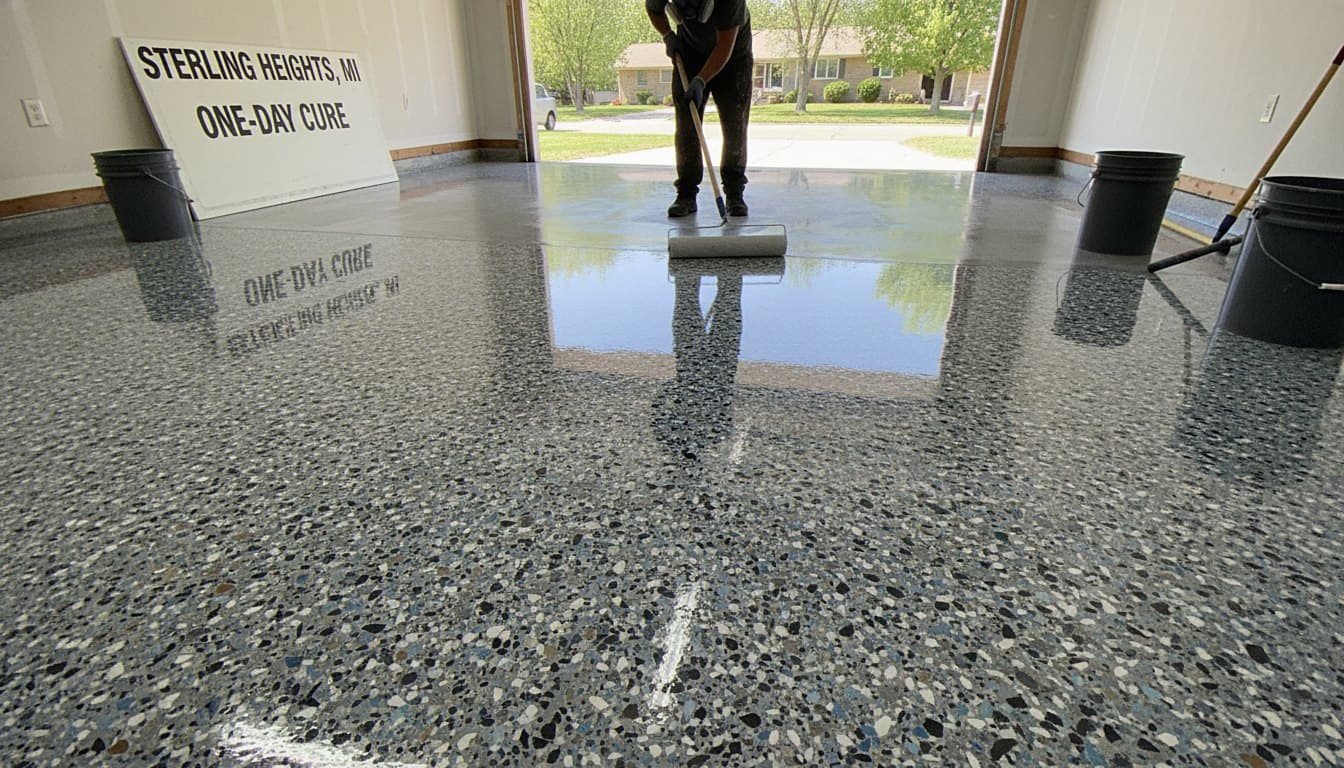
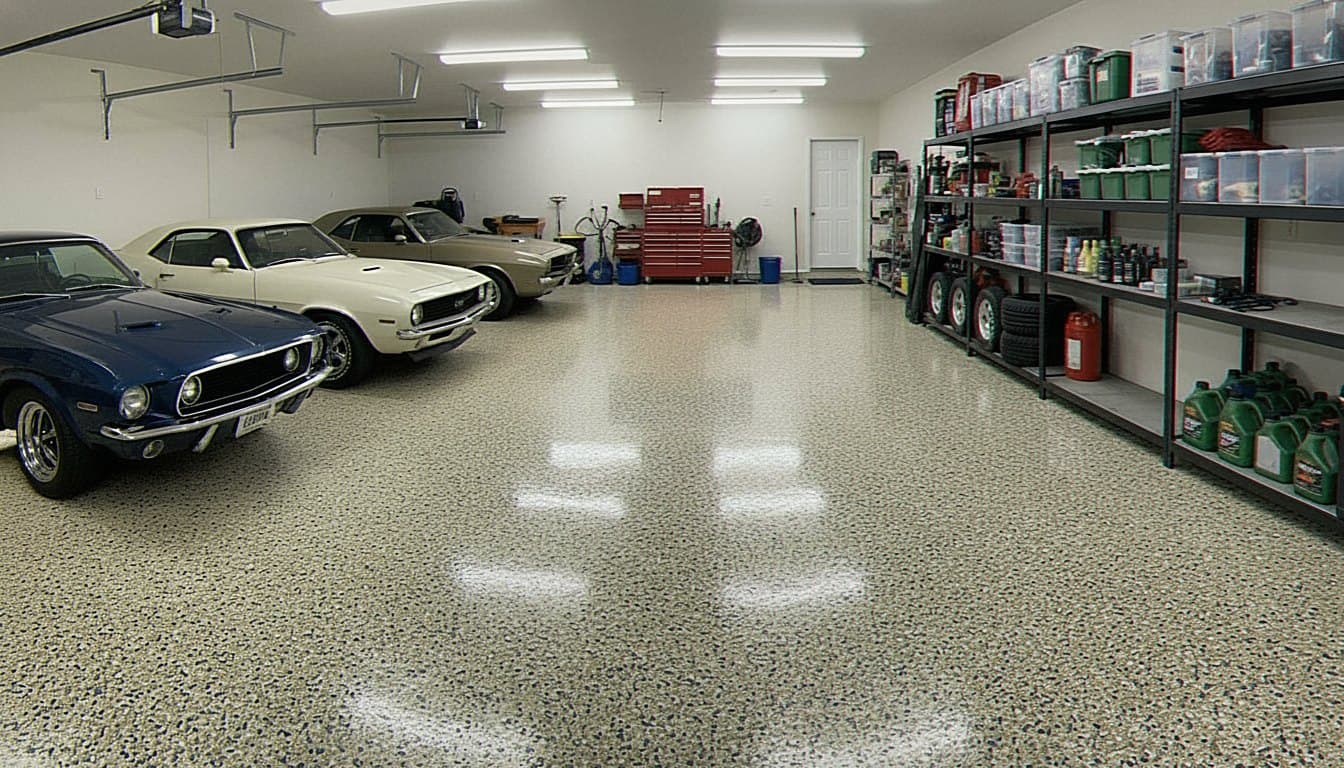
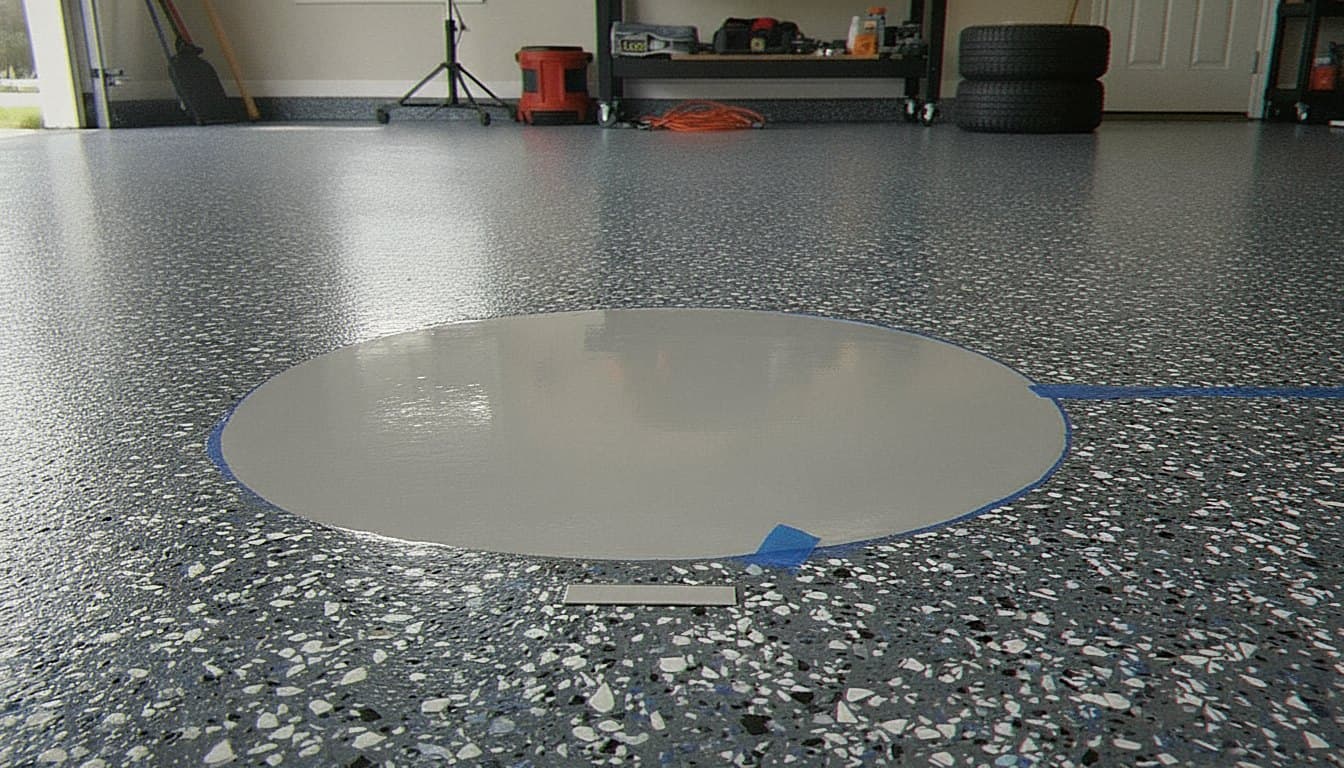
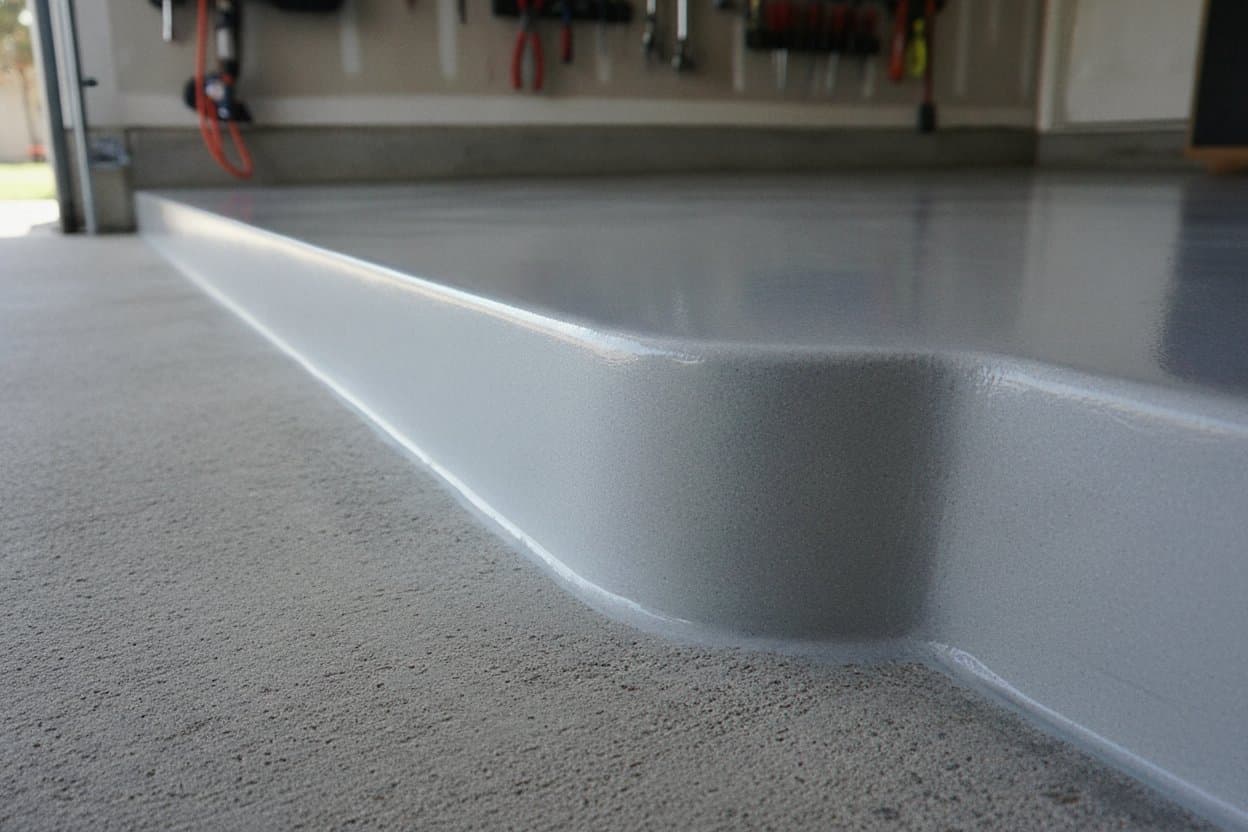
We build the epoxy garage floor in four coats. First, a planetary grinder opens the slab to about a CSP-3 profile, because the resin needs that grip. Second, our crew reads the slab with a calcium chloride disc or a moisture probe, and that number picks the primer. Third comes a solids epoxy base at 16 to 20 mils, and the color flake drops into the wet film. Fourth is polyaspartic on top. That last layer is a different chemistry. It gives the floor hardness, it stays clear in sunlight, and it cures fast enough that we wrap the whole job in one working day. A floor built to that spec runs 15 to 20 years, the top of the 10 to 20 a professional epoxy install is good for, while the box kits we get called to strip usually let go inside 1 to 3 winters.
Across Macomb County, from Utica and Shelby Township down to Warren and Clinton Township, the slabs share the same damp and freeze cycle that breaks most coatings. Our Epoxy Flooring Sterling Heights crew walks every garage in person before we quote it. The number goes on paper after that visit, never over the phone from a photo.
The epoxy work Sterling Heights homes actually need
Ironclad Sterling Heights Epoxy Flooring
Garage Floor Epoxy
How a resin floor with four coats goes down on a garage slab, and why it holds through a Macomb County winter.
A garage off Dodge Park or near Mound Road usually sits on a slab that soaked up salt slush and dropped oil for twenty winters. Stand on it. The surface chalks under your shoe. That chalk is the slab giving up. The boxed kit from the home center buries the chalk under thin resin. It looks fine in May. Then by August it hazes over. The first warm tire of summer peels it off in patches. We do not answer that with another bucket of paint. We build a garage epoxy flooring system made for the damp and the road salt this part of Macomb County puts down every winter.
- A double garage wraps in one working day, and you walk on it that evening.
- Cars roll back onto the slab about a day after the topcoat goes down.
- Flake texture adds grip when boots track in salt slush in February.
Basement Floor Epoxy
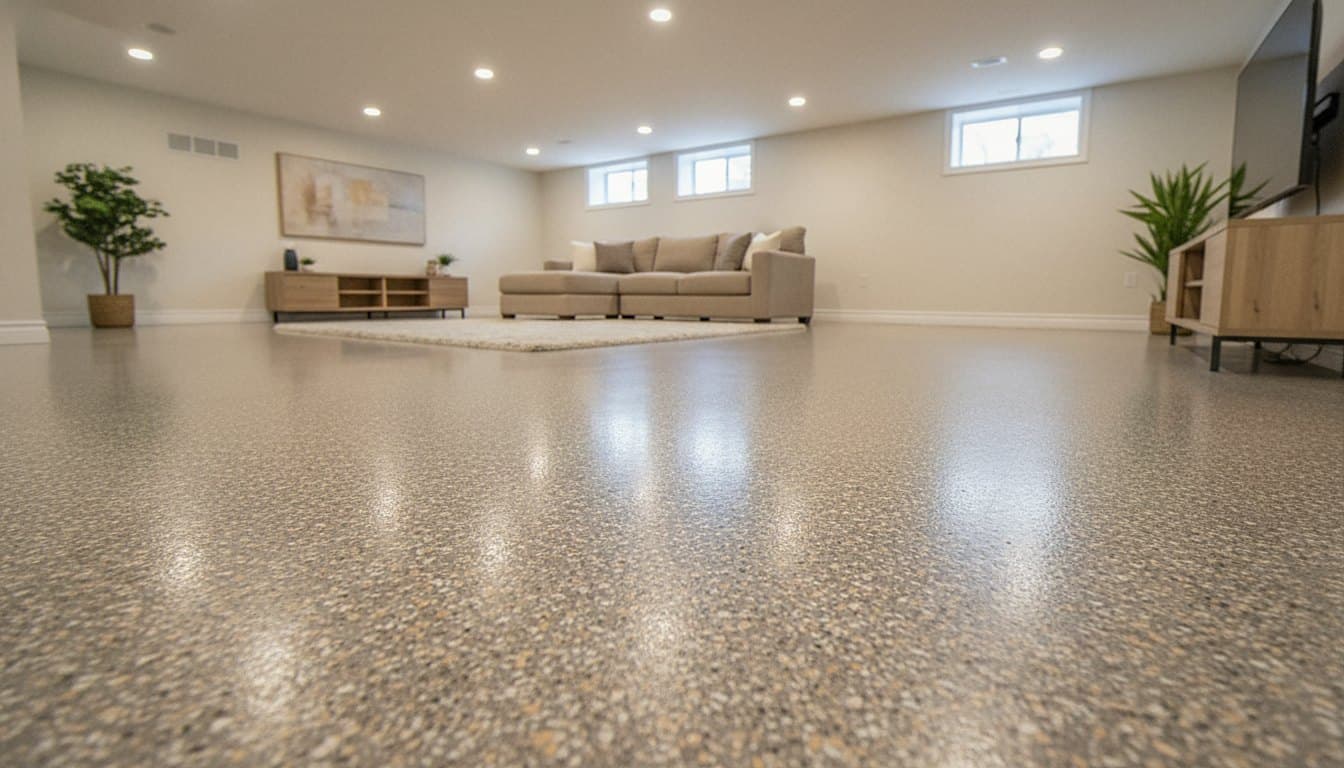
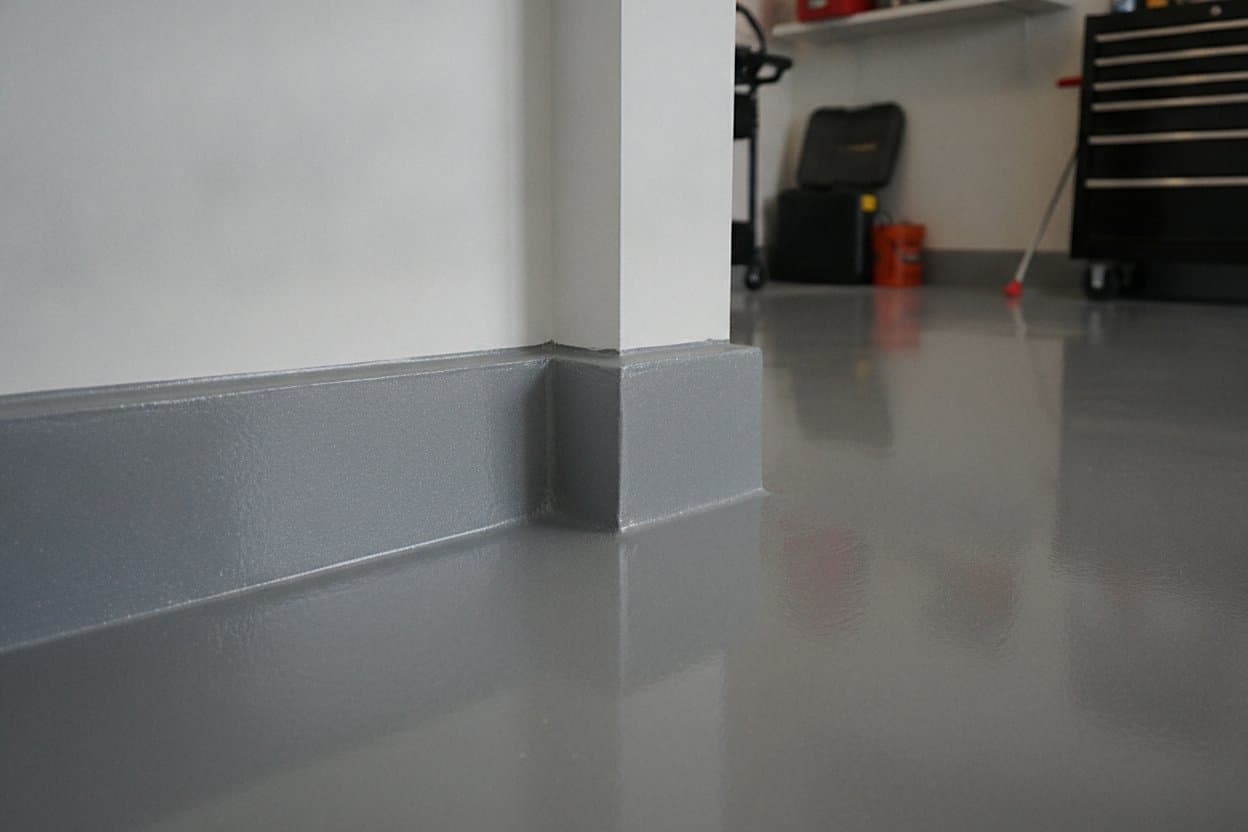
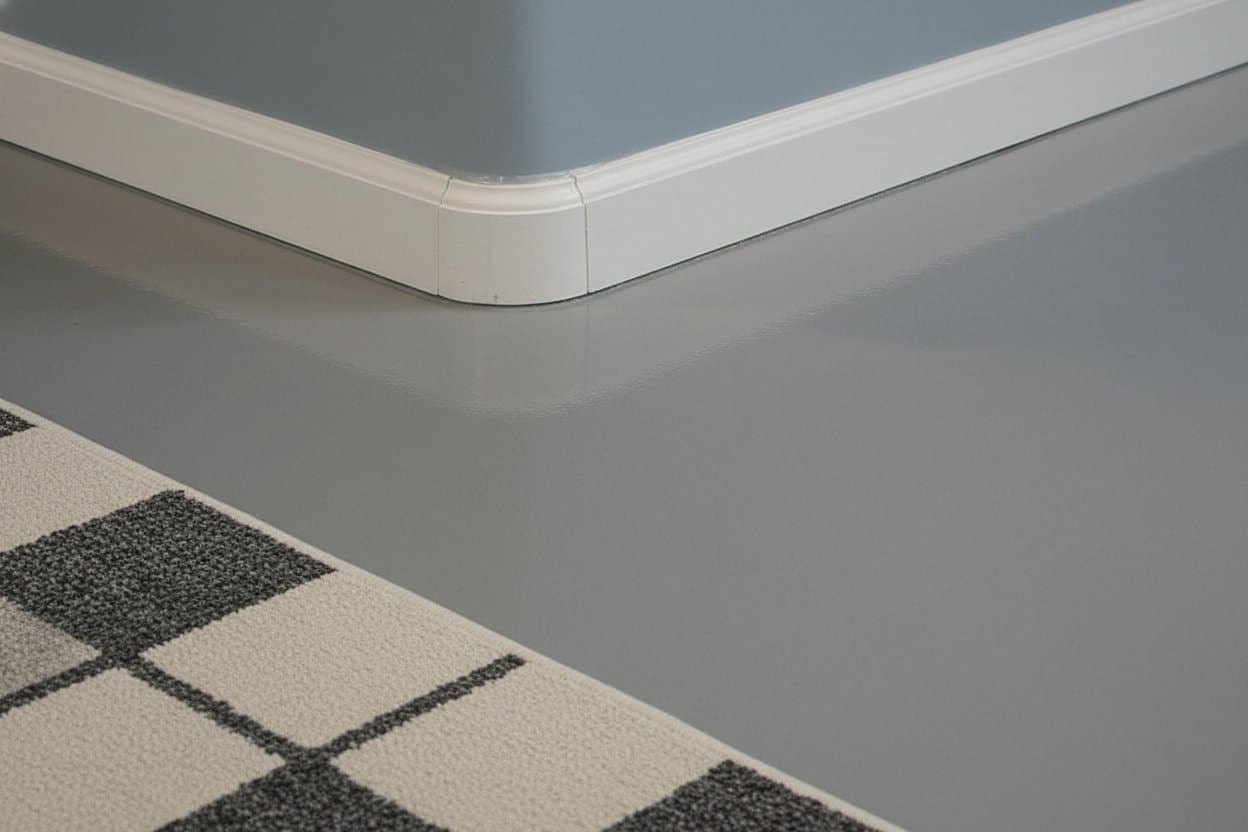
We read the slab moisture first, then lay a basement floor epoxy sized to that number, so a Sterling Heights basement stays bright and dry underfoot.
Basement floor epoxy in Sterling Heights faces one problem the garage never does. Wet soil presses up under the slab in every season. Homes near the Clinton River or off Dodge Park sit on concrete that pulls groundwater from below. A boxed paint ignores that water. It looks clean in May. By the first humid July it blisters, lifts along the walls, and the room smells like a damp towel. We do not fix that with a thicker coat of paint. Good epoxy flooring starts by reading the slab first, then building a coating that matches what the concrete is doing under your feet.
- A typical basement floor wraps in one working day, ready to walk on by evening.
- A light base coat throws ambient light back and brightens a dim room.
- The polyaspartic top holds grip under furniture, gym gear, and pet paws.
Polyaspartic Epoxy Coatings
Polyaspartic is the topcoat that lets a floor cure in a day, hold its color in the sun, and shrug off warm tires here in Sterling Heights.
In Sterling Heights most epoxy flooring contractors use the word epoxy for everything, and that hides a real split. Pure epoxy makes a fine base coat. As the top layer it falls short. It yellows in sunlight. It turns soft and gummy in late July heat. And it wants one to three days of cure before a tire can touch it. Polyaspartic was built to beat all three. It is also the reason a floor can wrap in a single day. That is why most of our Sterling Heights polyaspartic work goes down over an epoxy base, not on its own.
- Cures fast enough that most floors wrap in one working day.
- Stays clear in sunlight, so the floor will not yellow by August.
- Cures harder than industrial floor sealer, which is what beats warm tire pickup.
Metallic Epoxy
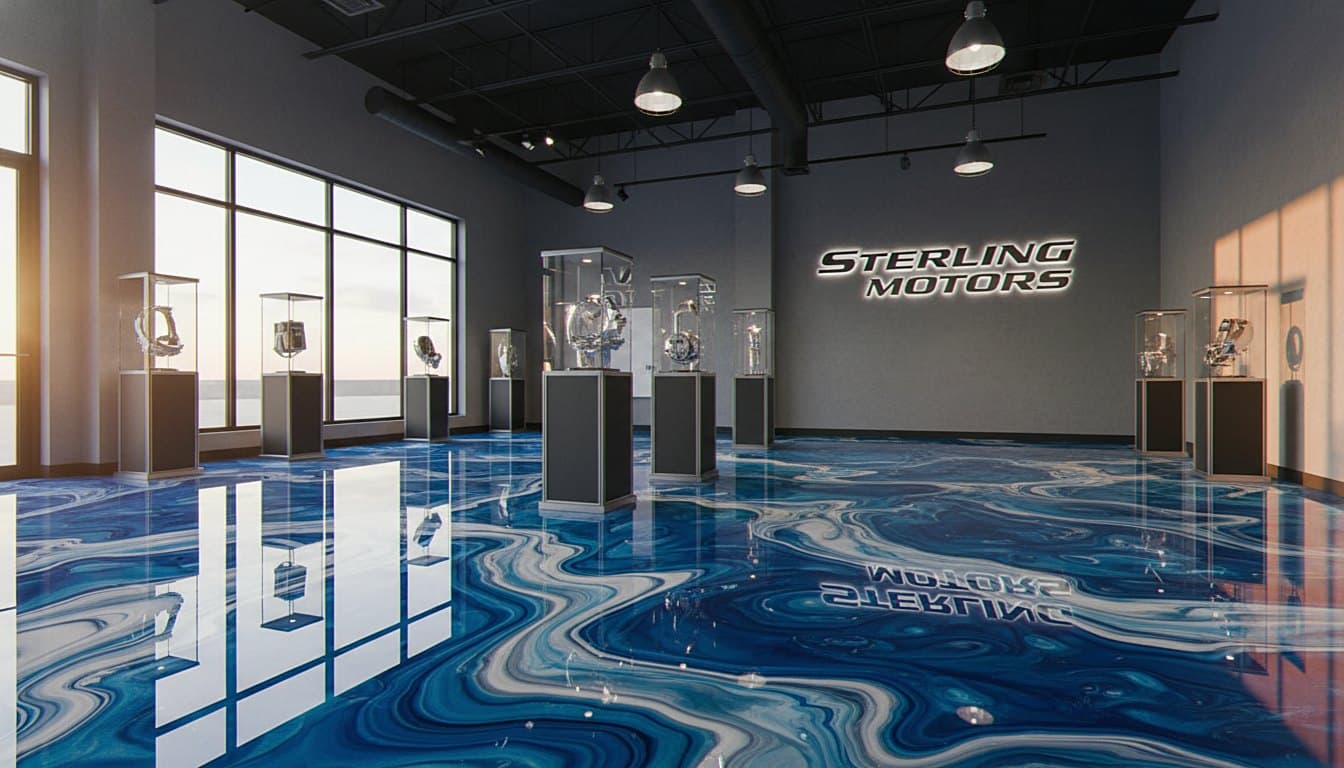
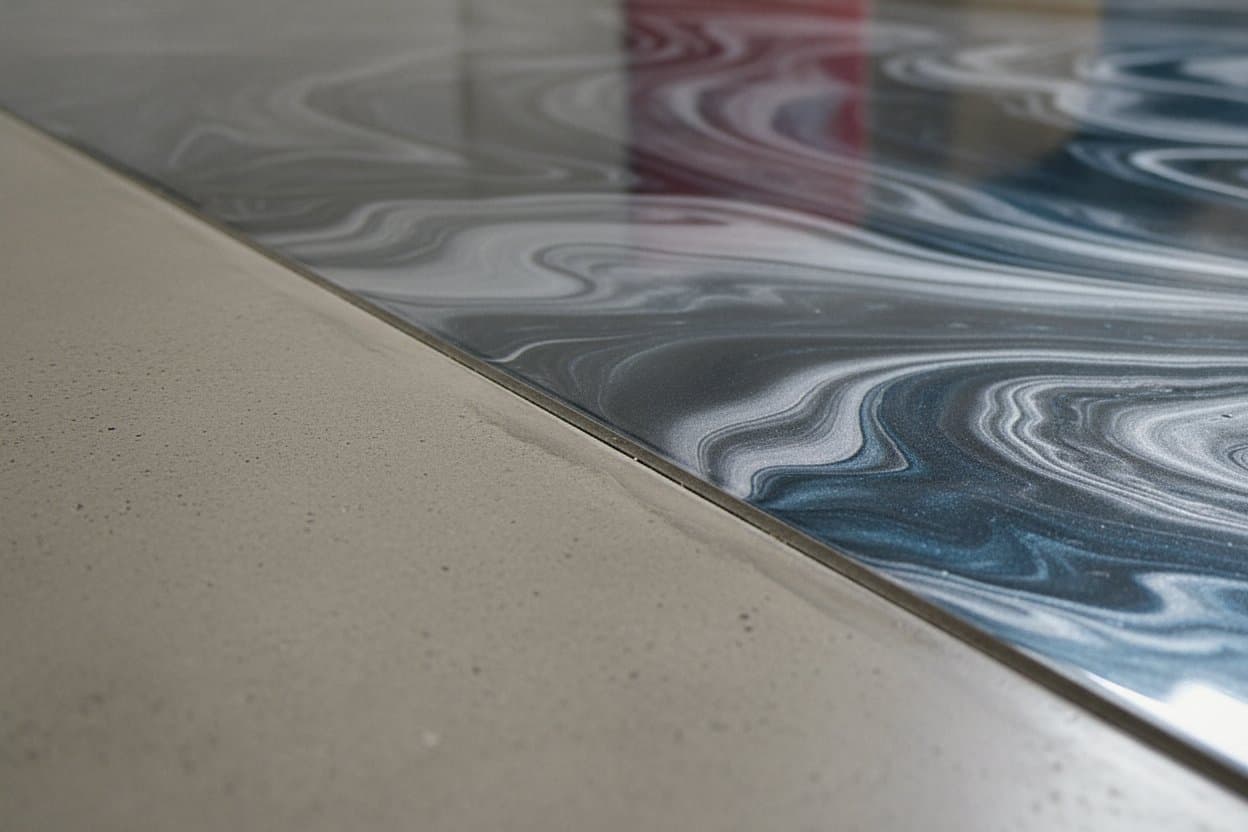
Metallic epoxy blends mica into clear resin, swirled by hand while wet, then sealed under polyaspartic for real depth.
Metallic epoxy is the floor people pick when they want the slab itself to be the feature, and it is the pour that sorts the skilled epoxy flooring contractors from the rest. In Sterling Heights we pour it in finished basement bars, show garages, and the odd office lobby off Hall Road. The look comes from mineral mica stirred into clear resin. As the resin spreads, the mica drifts and settles, and that drift is what reads as depth. A flake floor hides the slab. A metallic floor turns the slab into the art.
- Common blends here: copper on slate, polished nickel, storm blue, warm walnut.
- Sealed under polyaspartic. Same chemical and daylight toughness as any other system.
- No two floors come out the same, since the mica moves a little on every pour.
Decorative Flake Epoxy
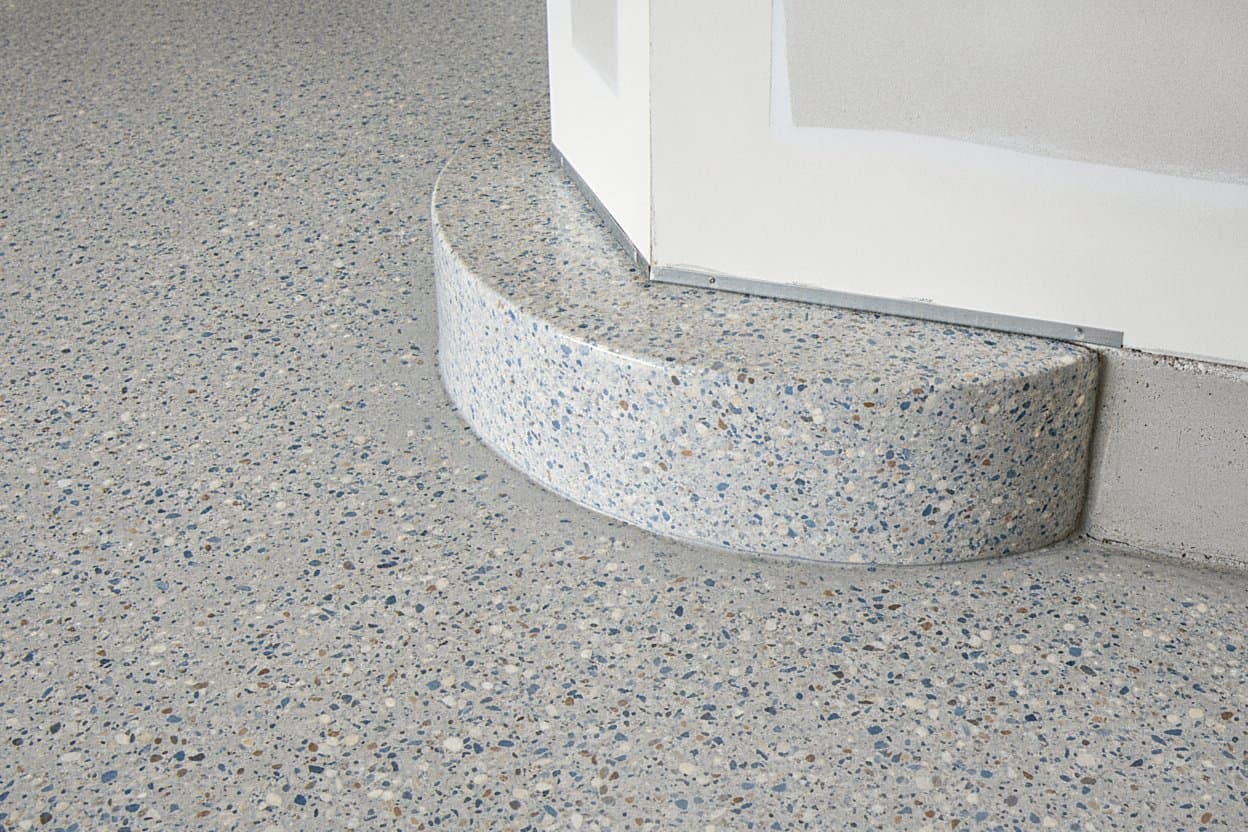
Vinyl chips broadcast to rejection over a solid epoxy base, then sealed under polyaspartic. It is the floor most Sterling Heights homeowners pick once they see it.
Decorative flake epoxy is the floor most Sterling Heights homeowners land on once the choices sit side by side. The look comes from vinyl chips thrown across a wet epoxy base until the surface will not take any more. A garage off Schoenherr or near Dodge Park takes a beating. Road salt rides in on the tires all winter, oil drips in summer, and a bare slab shows every mark. Flake hides all of that. The chips break up the surface so scuffs, tire ghosts, and hairline cracks stop reading as flaws. We pour this floor as a full system, not a paint job, and we build it for the freeze and thaw cycle this part of Macomb County runs through every year.
- We broadcast flake until the wet base takes no more, so coverage stays full and even.
- The chip pattern masks tire marks, dust, and the hairline cracks an old slab carries.
- Built in texture keeps footing sure when winter boots drag slush across the floor.
Epoxy Repair and Recoat
We read the failure with a small test grind, strip the bad coating, and reinstall the right system. Most epoxy repair jobs wrap in a day.
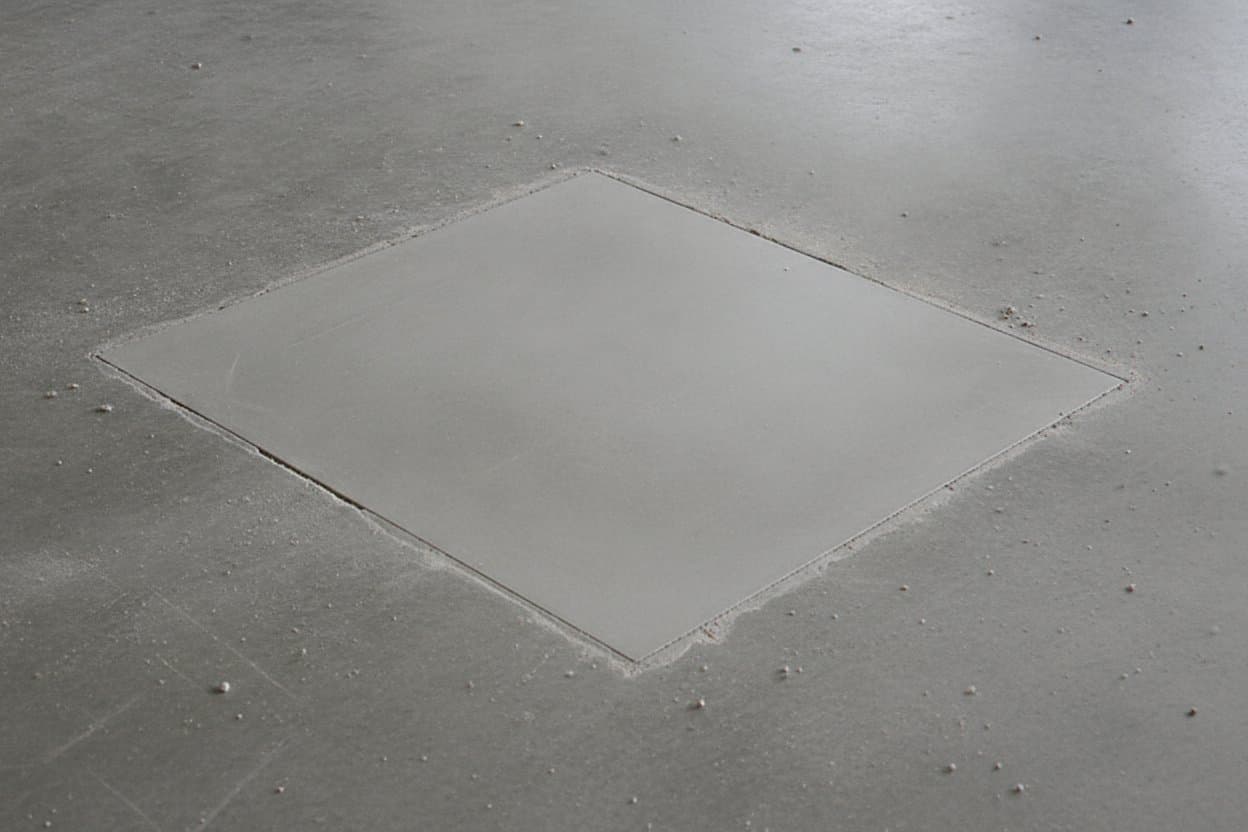
A Sterling Heights garage with peeling or sticky epoxy flooring is almost always a coating problem. The slab below it is usually fine. The product on top was simply the wrong pick. We see three causes over and over. Cheap store kits peel within a winter or two. Plain epoxy with no top layer turns yellow and sticky by midsummer. And any coating laid on bare concrete lifts once moisture pushes up from below.
- We run a test grind during the visit, so the quote matches the floor.
- We strip the failed coating all the way back to clean concrete.
- We patch with mortar where the old coating pulled concrete up with it.
From first call to job done.
Walk the slab
We start with an in-person visit. We read the slab for moisture, existing coatings, cracks, and the surface profile before quoting anything.
Diamond grind and prep
A planetary grinder opens the concrete to a CSP-3 profile. Cracks and pop-outs get a polyurea fill. No resin goes down until the surface is clean and dry.
Four-coat install
Primer sized to the moisture reading, solids epoxy base, vinyl flake broadcast, and a polyaspartic topcoat, all in one working day.
Cure and walk
Foot traffic by evening. Vehicles roll back on the next day. Full chemical resistance comes in at seven days. We go over the timeline before we leave.