Sterling Heights Epoxy Flooring logoSterling Heights Epoxy FlooringFlooring
Garage Floor Epoxy · Sterling Heights

Garage Floor Epoxy Installation in Sterling Heights, MI

How a resin floor with four coats goes down on a garage slab, and why it holds through a Macomb County winter.

1 day installs · typical timeline

Tell us about your project.

We'll be back to you the same business day.

No spam. We'll text you to confirm.

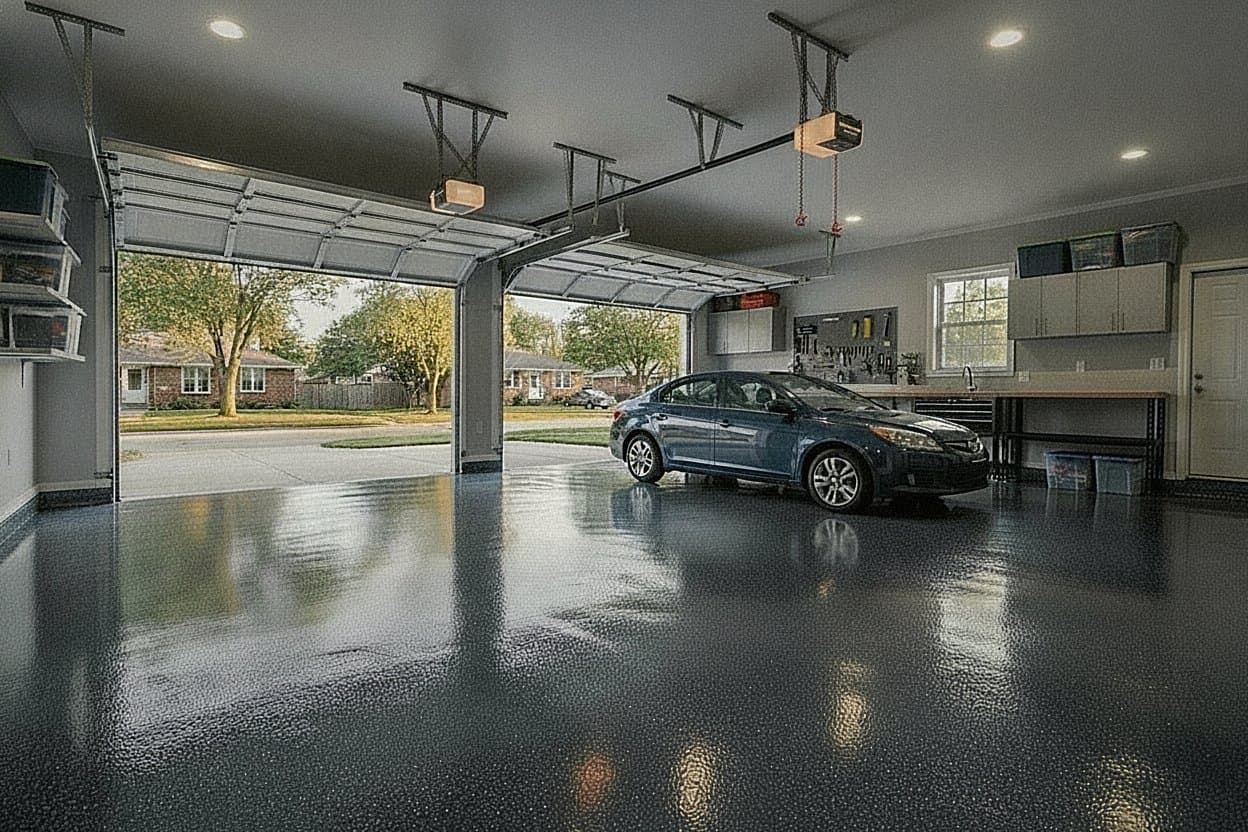
Glossy garage floor with gray vinyl flake
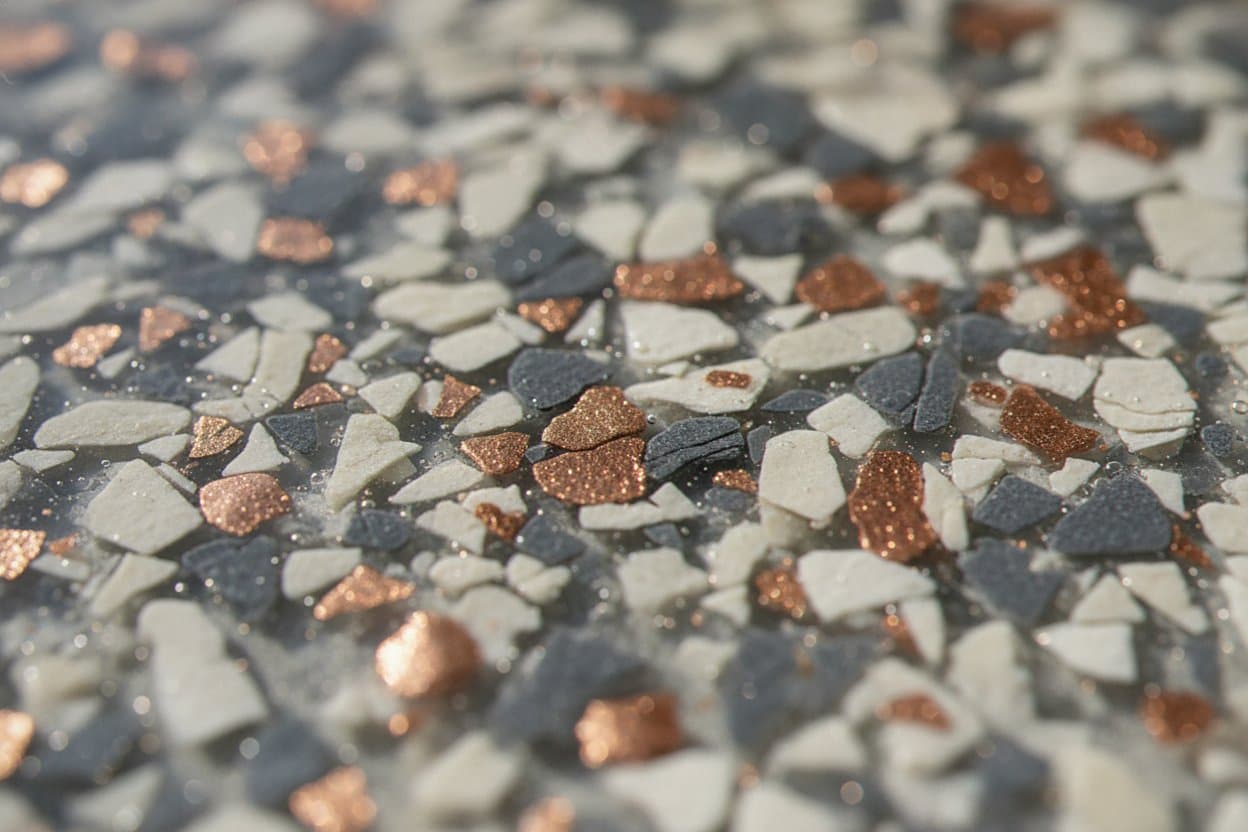
Close-up of vinyl flake surface texture
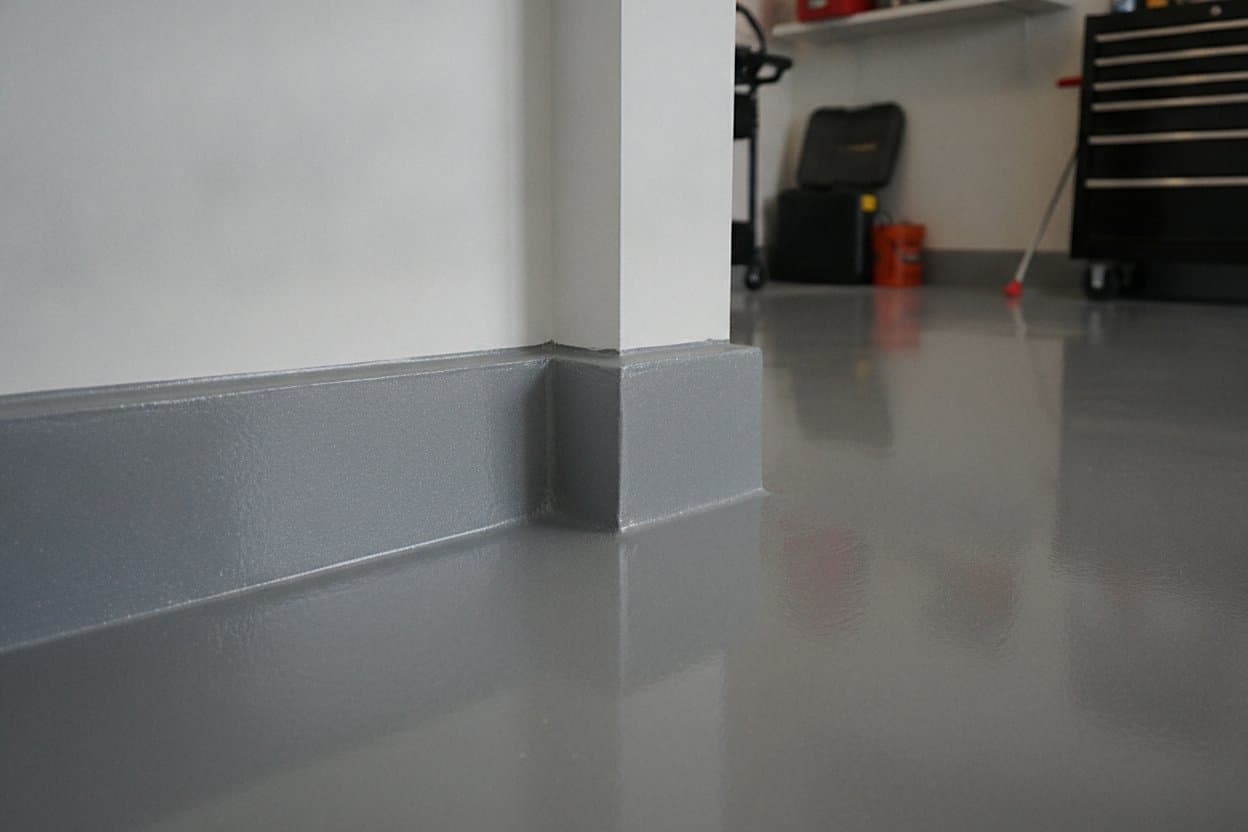
Epoxy edge meeting garage wall
What we install

What goes into a garage floor that lasts here

A garage off Dodge Park or near Mound Road usually sits on a slab that soaked up salt slush and dropped oil for twenty winters. Stand on it. The surface chalks under your shoe. That chalk is the slab giving up. The boxed kit from the home center buries the chalk under thin resin. It looks fine in May. Then by August it hazes over. The first warm tire of summer peels it off in patches. We do not answer that with another bucket of paint. We build a system made for the damp and the road salt this part of Macomb County puts down every winter.

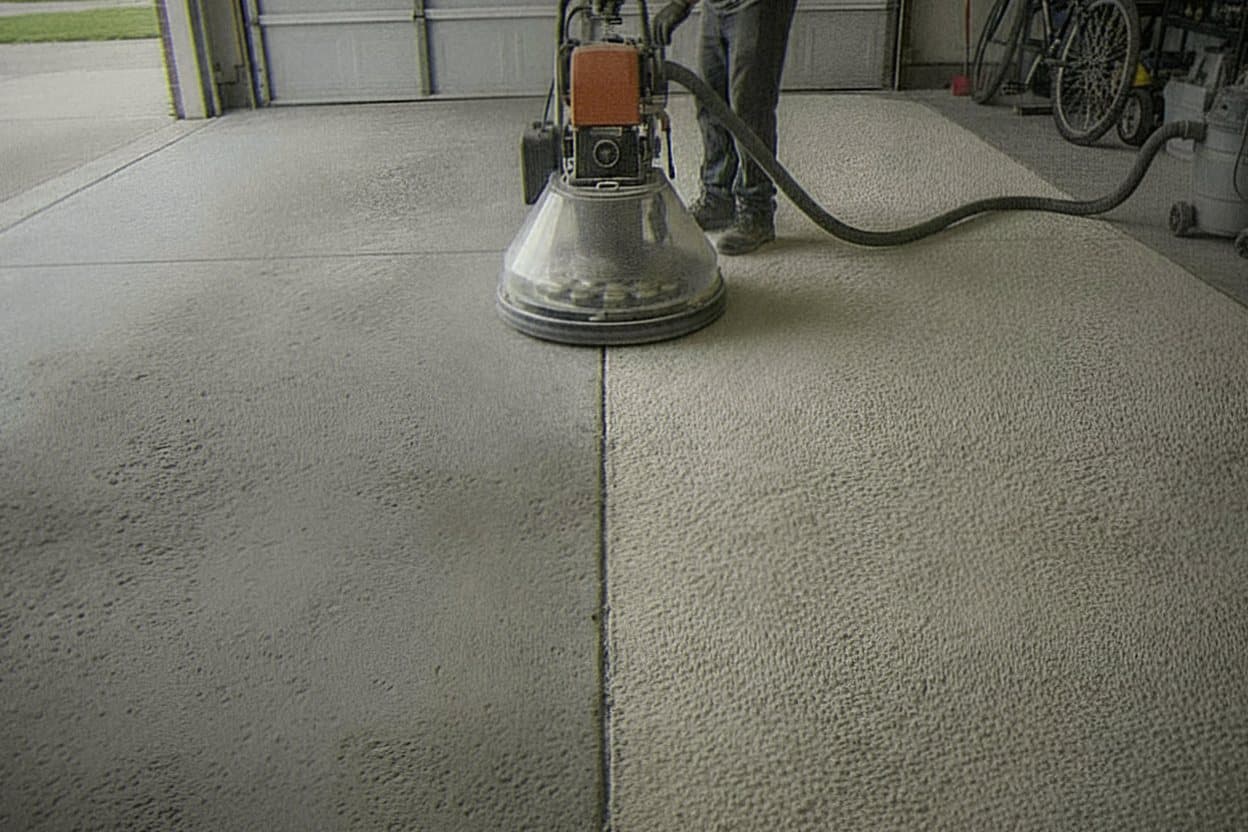
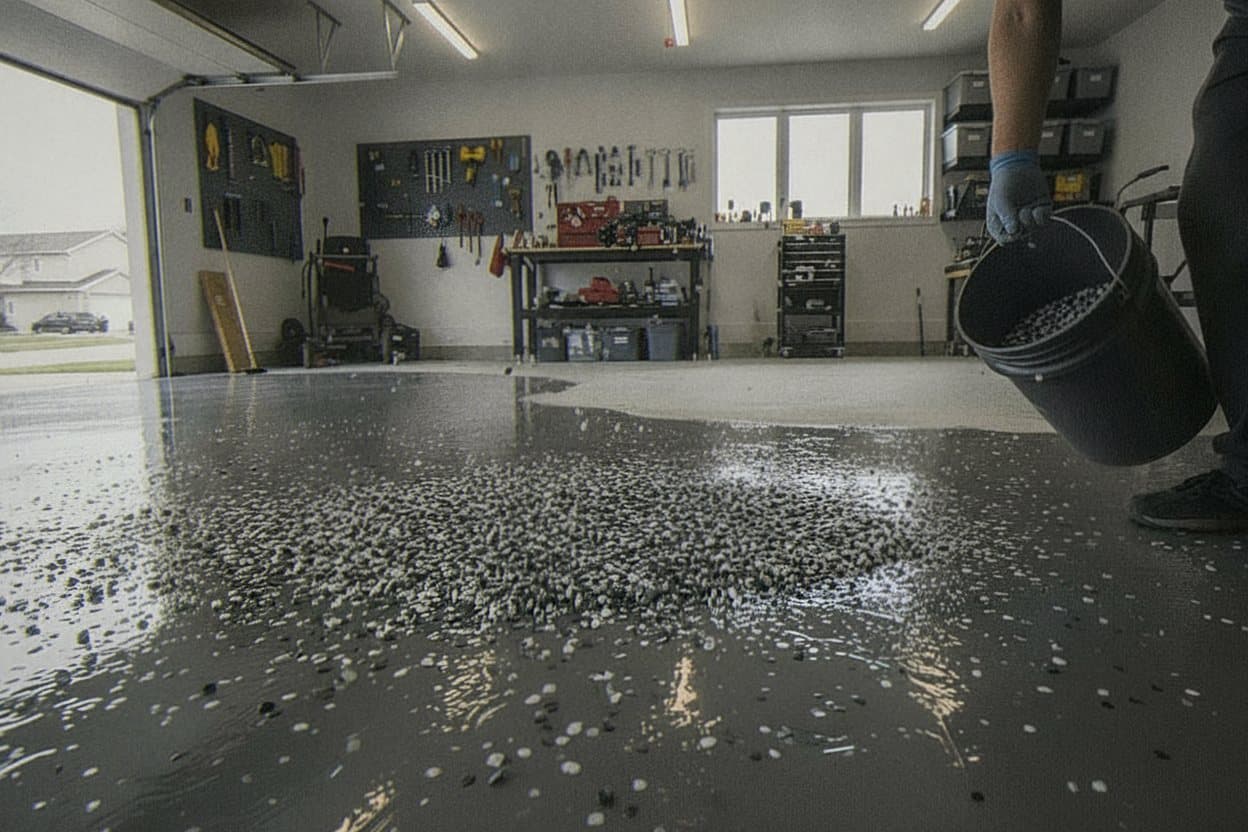
We run the install in four coats. First, a planetary grinder opens the slab to about a CSP-3 profile, because the resin needs that grip. Second, our crew reads the slab with a calcium chloride disc or a moisture probe, and that number picks the primer. Third comes a solids epoxy base at 16 to 20 mils, and the color flake drops into the wet film. Fourth is polyaspartic on top. That last layer is a different chemistry. It gives the floor hardness, it stays clear in sunlight, and it cures fast enough that we wrap the whole job in one working day.

  • A double garage wraps in one working day, and you walk on it that evening.
  • Cars roll back onto the slab about a day after the topcoat goes down.
  • Flake texture adds grip when boots track in salt slush in February.
  • The film shrugs off brine, brake fluid, gear oil, and the odd antifreeze spill.
  • All work is indoors, so a portable heater holds cure temperature steady through winter.
The slab is rarely the problem. The coating spec almost always was.

Across Macomb County, from Utica and Shelby Township down to Warren and Clinton Township, the slabs share the same damp and freeze cycle that breaks most coatings. Our Epoxy Flooring Sterling Heights crew walks every garage in person before we quote it. The number goes on paper after that visit, never over the phone from a photo.

If your garage floor in Sterling Heights is pitting, dusting, or peeling under the tires, the fix is the full coating system, not another weekend kit. Send us the details with the form on this page and we will set up a time to walk the slab. We do the prep, the coats, and the cleanup ourselves.
Materials

Why each of the four coats earns its place

Treat the grind as the step that matters most. The diamond pass does three jobs at once. It pulls the soft surface paste off so the resin can grip the aggregate underneath, it flattens the high spots left by the original power trowel, and it opens the pop outs and small cracks that need a flexible fill. A slab that was painted, sealed, or carries decades of oil ghosting still has to come back to bare aggregate. When a crew skips the grind, or swaps in an acid etch instead, that shortcut is why a cheap floor lifts a few years later.

Once the slab is open, the vapor reading picks the primer. A slab that sits low or near the Clinton River can wick groundwater up from below, and an unprimed coating fights that vapor in the wrong direction. The base layer is a solids epoxy at 16 to 20 mils. That is thick enough for the flake to sink in, and thin enough to cure clean. The polyaspartic on top is a wholly separate chemistry. It cures with the humidity in the air rather than with solvent flashing off. You can walk on the film within hours. It stays clear in sun where plain epoxy turns yellow, and it tests harder than the tire rubber that peels cheap floors every August.

  • Solids only base coat, so the film does not shrink as it cures.
  • Flake locks into the wet resin by gravity, not by glue.
  • Polyaspartic topcoat takes the salt, the warm rubber, and the gear oil.
  • Four coats over a profiled slab: prime, base, broadcast, topcoat.
Planetary grinder preparing concrete slab
Worker applying wet epoxy base coat
What about the alternatives?

Other ways people try to refresh a garage slab

Plenty of cheaper finishes are on offer, and most look fine for a season or two. The rows below describe what each one does once a Macomb County winter cycles through it twice. This is field behavior, not marketing copy.

Latex porch paint

Cheap, and the gloss reads well in May. The first warm tire of summer pulls it off in patches, and snow boots finish the job by February.

Skip

Interlocking PVC tiles

They snap together with no tools and lift right back out. They also trap salt grit and moisture under the tile, which speeds up the dusting they were meant to hide.

Acceptable

Penetrating concrete sealer

It lets the slab breathe and locks in for a couple of years. It does nothing for warm tire pickup, though, and the dust comes back in a season.

Acceptable

Boxed DIY epoxy kit

Year one looks fine in a phone photo. Year two yellows. Year three peels under warm tires, because the kit has no real prep step.

Skip

Full epoxy and polyaspartic install

The system above, all four coats. We build it for the swing season freeze cycle, you park on it within a day, and scratches read as texture inside the flake.

Recommended
How it goes

From quote to walk-on, fast.

01

Walk the slab

We start with an in-person visit. We read the slab for moisture, existing coatings, cracks, and the surface profile before quoting anything.

02

Diamond grind and prep

A planetary grinder opens the concrete to a CSP-3 profile. Cracks and pop-outs get a polyurea fill. No resin goes down until the surface is clean and dry.

03

Four-coat install

Primer sized to the moisture reading, solids epoxy base, vinyl flake broadcast, and a polyaspartic topcoat, all in one working day.

04

Cure and walk

Foot traffic by evening. Vehicles roll back on the next day. Full chemical resistance comes in at seven days. We go over the timeline before we leave.

Before you book

Questions worth asking before you book the work

We answer every one of these straight, right there on the site visit. If any crew you call dodges one of them, that is your cue to keep dialing.

Listen for the word grind, not etch, and not a pressure rinse. Acid etching leaves a residue that fights the new resin. Spraying water at the slab does not break the surface paste at all. We bring a planetary grinder with a vacuum shroud, because that is the only prep that brings a slab to a true CSP-3 profile, and we put it on the quote in writing.
Static hairline cracks get chased open with a small saw, vacuumed clean, and filled with a flexible polyurea before the primer. Active joints, the expansion lines cast into the slab, get isolated instead. Anything we lock across a moving joint will tear, so we detail the coating to stop and start at the joint rather than bridge it. On the site visit we name which cracks are which.
Yes, as long as the topcoat is polyaspartic and not more epoxy. Warm tire lift happens because a soft film grabs the tire as it cools, then comes up with the tire when it pulls away. A cured polyaspartic is harder than the rubber. The tire leaves clean, even after a July run down M-59.
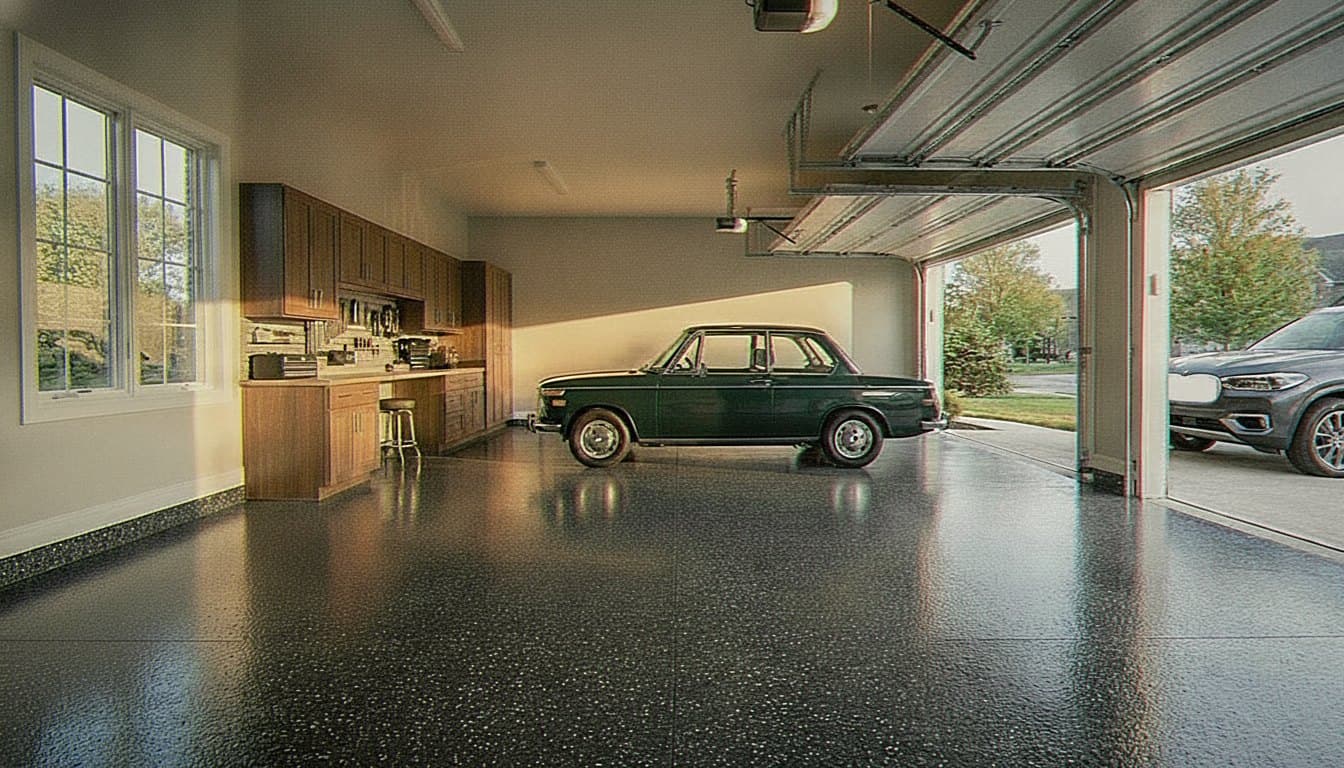
Flake arrives blended from the maker. The usual picks are a slate and copper mix, an earth tone neutral, and a custom blend keyed to your brick or trim. A solid color with no flake exists, but it shows every scratch. Look at the sample boards under your own garage lighting, because a blend on a screen never reads the same on the slab.
Foot traffic returns four to six hours after the topcoat goes down. Light gear like toolboxes and shelving goes back the next morning. Vehicles roll on at about 24 hours. Full chemical resistance, where a spill can sit on the surface without reacting, lands around day seven. Most owners reload the garage over the weekend after a Friday install.
Aftercare

Living with the floor over the next decade

A cured polyaspartic surface asks for far less than the raw slab it replaced. Dropped oil sits on top of the film instead of soaking into the aggregate. Salt brine wipes off with a damp rag. Weekly sweeping plus a monthly damp mop with a pH neutral cleaner is the whole routine. Two slow enemies do the real damage over time. One is grit dragged across the floor again and again, and an entry mat handles most of that. The other is degreaser poured straight from the jug, since the dilution on the label is there for a reason. Scratches still happen under enough force, but on a flake floor they land inside the texture and nearly vanish.

  • Sweep or vacuum once a week, since salt grit is the only real abrasive on the floor.
  • Damp mop once a month with a pH neutral cleaner, and skip strong ammonia and any acid product.
  • Set a coarse fiber mat at the door to catch grit before it lands on the floor.
  • Wipe spills like brake fluid, antifreeze, and engine oil within a day, or they leave a ring.
  • If a dropped tool chips the topcoat, we can spot repair it while the flake batch is still in stock.
Garage floor epoxy installation overview
FAQ

What Sterling Heights homeowners ask about garage epoxy

A good stack of three coats holds up for years before it ever needs a fresh wear layer. The top layer tests harder than the sealer used on shop floors, so road salt, hot tires, and the long freeze and thaw swing of a Macomb County winter never get the chance to wear it down. Cheap kits are different. The boxed kits sold at the home center tend to fail inside two or three winters, because they skip the moisture primer and the top coat stays far too soft.
The two products do different jobs in the same floor. Epoxy is the base. It grips the slab and builds up the film thickness, while the polyaspartic on top is the hard, clear layer that cures fast enough to finish a whole floor in a single working day. A floor with only epoxy on it stays softer, turns yellow in sunlight, and takes much longer to cure before you can use it. We lay both.
Three things drive the number: the floor size, the shape the slab is in, and the finish you pick. A slab with deep cracks, oil soaked into it, or a heavy moisture reading adds real prep time, and a metallic pour or a dense custom flake blend sits at the higher end of the range. A good crew walks your slab in person. Then it puts a fixed number on paper, because the slab is the one thing we truly have to see before we can quote.
Yes. The work happens indoors, so the season itself is not the real limit. As long as the garage holds about 55 degrees through the cure, our crew can pour a floor in January as easily as in June. Most winter jobs just run a portable heater for a few hours. Spring and fall book up fast, so winter often has the shorter wait.
Hot tires are the main reason cheap coatings fail. A cured polyaspartic top layer is harder than the tire itself, so it stays put on the base even after a long summer drive home in heavy July heat. It does not lift. Ask each crew how they handle a callback if anything ever peels, and get that answer in writing before you sign the job.
Ready when you are

Get a fixed-price quote on your Sterling Heights Epoxy Flooring Sterling Heights this week.

Free on-site walk-through. Written estimate before a single bag is opened.

Call (586) 225-8221Get My Free Quote
Call NowFree Quote